 S3E19
S3E19
· 37:56
Jonathan Price (00:00.152)
Hello and welcome to this wonderful, unique episode as an after-sight original. Now, if you're listening to The Blind Chick, to Blind Level Tech, to Blind Sight, to Navigating Life with a Vision Loss, you're still in the same place, so don't change the station. We are bringing you a special after-sight, behind-the-scenes look into the life and story of Kim Wardlow.
Kim is our executive director and she's gonna share some very interesting insights about her life and what AfterSight means to her and how she has become the director at AfterSight. So stick around for this wonderful episode and Kim's journey and feel free to reach out with any comments or questions in your show of support for AfterSight. Thank you for listening.
Kim Wardlow (00:53.126)
I'm Kim Wardlow, the director of After Sight. If you've been listening to the Navigating Life with VisionLust podcast, you may recognize me, or at least my voice, from that podcast on which I host. But that podcast, as well as several others, including The Blind Chick, Blind Sight, Blind Level Tech, and The Blind Chick, are all After Sight original podcasts that we produce. And After Sight also has volunteer-read materials, lots of other things, programs for
Folks that have vision loss are blind or just need an alternative access to print. So lots of different things that we do under AfterSight. But today I just wanted to share with you, this is a big year for me and we've been sharing on lots of our social media and our email list about my big 60th birthday.
And it's also later this year, I'll celebrate 25 years here at AfterSight, although it's had a couple other names along the way. So I thought that I would just also share with all of you so that it would be here if folks were interested in who is the director of this organization. Maybe you hear my voice every once in a while, but don't really connect me with AfterSight. So I thought I would just go ahead and just do a quick
video for you and kind of go over some of the things I've been sharing about my life, which has been really weird for me because I don't normally put a lot of personal information out on social media. So it's been a little bit odd and unsettling for me, but it's also been kind of fun to look through and look through my life and kind of see how everything connected and how I ended up as executive director of AfterSight. So I was actually, while I was born,
here. I was born in Inglewood, Colorado, but we moved when I was two. So I really grew up in Lamar, Colorado, which is in the southeast part of Colorado. It's a rural community. it was really just, you know, where I grew up in was really just a place where I could be creative. I went to Miss Pat's preschool. I went to Parkview Elementary, which is still there. And of course I grew up
Kim Wardlow (03:14.912)
In the generations when the first kids to grow up with Sesame Street, Mr. Rogers neighborhood, the electric company, all of those things was now Rocky Mountain PBS. And I just love to be creative. was, I was painting and drawing and making things and pretending. And I really wanted to learn how to cook and you couldn't join 4-H until you were eight years old. And so as soon as I could, I joined 4-H and that was what I first did was cooking, their cooking beginner cooking course.
And when I would make things like the first year I made my great aunt's oatmeal chocolate chip cookie recipe for the fair, the state, for the, well, actually for both the county and the state fair ultimately. And as I would go through and I'd be adding, I would pretend I was on PBS doing a cooking show and I would explain what I was doing and the ingredients and how to measure. so I always just, that was my dream to grow up in.
and do a PBS show. I don't do that, but I actually do the Navigating Life with Vision Loss podcast. not quite the same, but along the same lines. Who would have known? I would not have known at eight years old that I would be doing that. So sometimes things kind of come full circle. This year, of course, we're celebrating 250 years of our country and 150 years.
of the state of Colorado. Well, when I was 10, we were celebrating 200 years of our country, country's history and 100 years of our state being a state. And so I was surrounded by community. was, you know, learning all about how working together and working with each other is really beneficial. And so that was kind of the first, the first part of first decade of my life.
I guess, just kind of learning those things from zero to 10. And then as I progressed, actually that year when I was 10, I was in the Creative Cooks contest, which is through 4-H, and you had to do like a table setting, and you had to create a menu. And at the competition, had like your little card table with your table setting and your centerpiece and explained your whole menu. And you had to serve the judge one item from your menu.
Kim Wardlow (05:38.496)
And I actually made a chocolate cake from scratch and decorated it so it looked kind of like a drum. So for the bicentennial kind of feel, you would be surprised how nutritious a chocolate cake with buttercream icing can be. Because I sold that. And this is before we were putting wheat flour and extra nutrients, sneaking things in to make things that weren't really nutritious, trying to help them be a little bit more nutritious. This is way before any of that.
So this was just a straight up chocolate cake from scratch with all the flour and sugar and chocolate in it. But I did talk about B vitamins and all sorts of protein from the eggs, all sorts of things. So I was doing that. I also did junior leadership. I'm kind of looking at some of the emails and the photos that I have here. Junior leadership in 4-H and some mentored kids as I got older who were at the beginning of the cooking program. That's what I mentored.
kids in. Both my parents at one point were teachers. My mom not after I was born, but my dad was still was teaching at the junior college there when I was really young. And then he started to work for the Southeastern Diversified Industries, which I think has a slightly different name now, but works with individuals with developmental disabilities. And so I kind of grew up with that nonprofit.
sort of vibe and I would visit him at his work and he introduced me to what they were doing. I really learned some of his coworkers' kids were afraid of the people who were the consumers, the clients there. And there was no need. They were just regular people. They just had a developmental disability. But I learned that to treat everyone with respect and dignity. And I watched my parents as they would contribute
their time outside of him doing nonprofit work, but just also both my parents contributing financially, contributing time to other types of charities and things being done in the community. That was just how we lived. So I learned that really early on that this is just how you live and giving back to your community. had some interesting jobs. Between my junior and senior year in high school,
Kim Wardlow (08:03.478)
I was in a program with some of my friends and also from Lamar High School, but also some kids from Wiley High School. And we were in a program where we learned this is when solar energy was brand new. And we were learning about solar energy in the morning and then in the afternoon. And this was summer. In the afternoon when it was really hot, like 100 degrees, we would go out and we'd build solar panels and we'd go install solar panels on the roofs of people's homes in 100 degree.
temperatures. It was crazy and I loved it. It was really fun. But I look back and I think, my gosh, we were, you know, we painted these solar panels black and we're up on, you the roof and so can it designed to soak up the sun. It was kind of crazy. And then we also weatherized schools. So also mostly outside in the summer. But it was it was a really great learning experience. And it was fun for me being I'm only child.
So was fun for me to work as a team with people I knew and then with some other kids that I didn't know as well that I met during that summer. And it was really fun and it was satisfying. We were excited about solar energy and this new thing. And we had math and science teachers that were part of the sponsoring of that program and taught us in the mornings. After that, when I started my senior year, I started to work after school.
at Valley State Bank. literally, won't, younger people will not believe this, but I literally went in after school and there'd be a stack of checks and there were big drawers and each account had a little section in the drawer. And I would literally take the check and look at the signature card and at the check and make sure that the signature matched the signature card. And then I would file the check away. And then at the end of the month, all those checks got sent out with the statements, which this doesn't happen anymore, very long ago.
I did that and I did that job clear through college when I was on summer breaks and holiday breaks. that was, and it just felt so grown up, like working at the bank. But it was a great experience for me and learning to work kind of in that professional type of environment as still a high school student. was really great. And just learning about work and showing up and being consistent and doing really good work and
Kim Wardlow (10:28.526)
being able to move from the bookkeeping eventually to being a teller and all those things. So that was a great experience for me as well. So that was 10 through 19. And then of course, by that time, I 19, I was in college and I was at the University of Denver and I was studying international studies with a minor in economics.
And I had the opportunity my junior year to study in Aberdeen, Scotland. And that was great. I celebrated my 21st birthday there for spring break. I went to Greece and I also did a tour into Russia and I picked this tour. Again, nothing online, know, searching for your travel plans online. I actually went to a travel agency in Aberdeen and they had a trip to, to Lisvianca in Siberia.
which when I looked on the map was exactly halfway around the world from Denver. So I picked it. I said, I'm going to go there. And my parents were so wonderful and really supported me to be able to travel because I was on scholarships at DU and some of them I couldn't use when I was overseas. So they were really, really helpful and I couldn't work legally. I, and I didn't work. They preferred, just soaked up the student life there and, and traveled and enjoyed that year. So
That's what I did. But that really broadened my perspective to live for a school year and travel and just be curious and learn about people and learn about different cultures. It was really great. When I came back my senior year, I worked for the, well, I did an internship for the international marketing division of the department of agriculture. And then I went from there, from that internship to working as a
marketing coordinator for an engineering company called Woodward Clyde. They too have gone through many different reiterations and names and been bought out over the years, but that's who they were when I first started. And I was excited because even though I worked, I was working in the Denver office, but I knew they had international offices. And that was, I thought, someday I could work there. And the headquarters was in Denver. So I thought, I have a good chance.
Kim Wardlow (12:54.42)
And indeed, I was able to do that. And I had some short-term assignments in Frankfurt, Germany. And then I worked a whole summer in Hong Kong, which was just an amazing experience and got to travel to the Philippines and bit to China. So I really enjoyed all of that traveling. But I was also learning skills that I ended up using.
here in my work at AfterSight. So I was a proposal writer, a marketing coordinator, but really most of what that involved was coordinating proposals. I'm writing like the general boilerplate things. And then obviously engineers and scientists wrote the key pieces about how we were actually going to perform work that required scientific and engineering knowledge. I didn't write that, but I helped to incorporate that and had
great people, editors, and we're processing people that, you I didn't do that piece. I had people that helped me. So I was just part of a bigger team. But all of those skills really carried over later on. also still was doing things with service. In college, I'd been on to Circle K, which is part of the Kiwanis. And then,
After I graduated and I was working, I volunteered at the Network Coffee House, which is a place for individuals who aren't housed to be able to go in the evenings and just what it sounds like, have coffee and people play cards and just a place to provide a safe place for community for folks. I worked with friends to plant trees. Actually, that might have even been folks from Hordor Clyde. I we did some service projects together. We built accessible trails for Wilderness on Wheels. So I just kind of continued.
that tradition of giving back because it was really ingrained in me to do that. And then as I got towards the end of my 30s, was still at Woodward Clyde into my early 30s. But in my 30s, all sorts of things changed. One, I started volunteering for this place called the Radio Reading Service of the Rockies. And that's what AfterSight was called.
Kim Wardlow (15:14.272)
at that time, which I think is 1998. And when I first started, I was recording on reel-to-reel tapes, not even like I'm doing now, recording on a computer. But that changed. I only did that for a month or two, and everything switched over. But I'd seen in my church bulletin, I'd seen a little write-up that they were looking for readers. It did not say that it was in Boulder, because I lived in like South Denver.
But I would drive up, initially have to work, and then on weekends I had a program, I did a children's program called Cultural Celebrations where I would read about different traditions in different countries that was at a kid's level. And so I could go in every other weekend and record for my weekly program. And that really worked out well for me. And then also during my early 30s, I switched jobs. So I started
working for GE Access. And so I was actually based in Boulder, which made reading a whole lot easier because I could go just turn my lunch hour to read. And I was a business development manager and I was based in Boulder, but my territory was actually the Northeast coast. So I worked with our outside sales team and then our resellers from like New York, New Jersey,
up through Boston and up through Maine. And I traveled half time. So I was gone every other week. I traveled. So I was either in the New York, New Jersey area or I was in New England. And I just rotated back and forth. And I loved that because I could go to the theater. I'd get half-price theater tickets at the little booth on Broadway and go see shows. And I had amazing
seafood and on my off hours. I had a weekend or two where I went in early or stayed a little bit extra and could do some sightseeing, like historical kinds of sightseeing. So I really, I really loved that. And it just, it was such a freedom to me when I traveled. I always just have the sense of freedom when I traveled. I also met some new friends and my friend Colleen, met, she was a wonderful gatherer of people.
Kim Wardlow (17:37.228)
And she organized hikes and snowshoeing adventures, races, going to see historical kinds of things. She was the person that she and her mom went to see the world's biggest ball of string when they went through Kansas, that kind of thing. So she was always organizing. People were just drawn to her and she would organize these big groups of people and small groups too, but lots of different people. And I also met my friend Christy through Colleen and they were really
my snowshoeing buddies and there were other people too that snowshoed with us. But we did a lot of snowshoeing and we did actually snowshoeing races even. I am not fast and not super athletic. So I never won a race, but it was just fun doing them. And we even did a mini triathlon at one point. I really miss both of them. They're unfortunately both died of cancer many years ago now.
But I miss both of them. And when I saw the picture of us snowshoeing together, that was just such a great memory for me. And so this was a big decade for me. As I was working at G Access, we hit a period where there were lots of layoffs in that computer industry. And I was caught in the third round of layoffs. And it was the day I was going in to read at Radio Reading Service.
And I went in and tell David I was still in shock. I think even though you know that there are layoffs, you know you might get laid off when it actually happens. You're still kind of in this state of shock of like, OK, what do I do now? And so he started asking me what I did. And I know he was thinking, well, maybe I know somebody I can introduce her to. But in the end, when he found out I'd done proposal writing and business development, and he said, wow, if you can take a big pay cut, you could come work here for us and do proposal writing.
fundraising, so, and outreach types of things. And so I thought, well, you I could do that for a bit, because, you know, it's always better to be working while you're looking for a job, right? So I was going to do that. And then, and then I just sort of kept on doing that and enjoying being at a nonprofit and helping folks and not having a quota of things I needed to sell necessarily and all of that.
Kim Wardlow (20:02.08)
And I really enjoyed it. And so obviously, I am still here. And as I said, later this year, I will celebrate my 25th anniversary here. But my second week I was there, so if I had not been laid off, I would have been in New York City. My rotating schedule would have put me in New York City on September 11th. But I was in my living room having been laid off watching the television. But I started September 17th of 2001 at Radio Reading Service. And about a week later,
We needed some work done on our T1 lines and this guy named Doug came in to do that and was asking like what we did and I'm telling him about volunteer opportunities and to read. And so finally he was able to get in downstairs to where he needed to work on our T1s. But then a couple of days later, he ended up signing up to volunteer and read for us. And so I would see him come in and read.
And a few weeks later, and I knew he was from like New York or New Jersey area because of his accent. And I just been working there. He will say he doesn't have an accent. You can still tell. But anyway, so he was reading. I got to talk to him and found out he plays a jazz trombone. And I was singing in Sweet Outlines at the time. And so anyway, we were talking as I was getting my coffee. He was prepping his paper. And then the phone rang. I went to answer the phone. He went to read. That was kind of it.
And then the next day he called to see if I want to have lunch. We did. And then that weekend we went out and had dinner and went to the theater and that was good. And then a couple of years later we got married. So that was like a really great result of going to work for radio reading service. I can't say it's happened for everyone, but it did happen for me. I my husband here and he did read for us for
for quite a while until he changed jobs and things changed for him as well too. But sometimes you just never know. Like one little decision ends up my decision to say yes, I would work at what is now AfterSight. It really totally changed the rest of my life. And you just never know. And the really funny thing I found is when I, I think it was maybe even when I first volunteered, it might've been when I first started working for
Kim Wardlow (22:21.966)
RSR, but I think it was when I first volunteered. I told my parents what I was doing. I was reading for the blind and my dad said, Oh, well, did you know your great, great, great, I think it was three greats grandparents taught at the school for the blind in London. I'm like, no, I had no, nobody ever mentioned that. I had no idea. And he's like, well, maybe it's just in your blood. Maybe that's just something you were meant to do. So
Maybe he was right, because I am still here. In my f****g I was just really focused on doing all that outreach for what became Audio Information Network of Colorado, and then now AfterSight in last couple years. But it was great because I still was able to do my book club. I rediscovered knitting, which I had done as a kid in 4-H and really loved and hadn't done in years and years. And I still like
going into a yarn store and all the colors and all the fibers. Like for me, that's just energizing and all my knitting groups and things are just so fun. I know there's like the stereotype of the old grannies knitting, but we're actually kind of really fun, sort of rowdy, mostly ladies. And my groups, my knitting groups, my fiber groups. And at that time, so I was still writing proposals, but I also did outreach. So I was traveling all over the state of Colorado. And it was great for lots of reasons.
I liked to meet all the different people. was sharing about AfterSight, RSR, and Audio Information Network at the time. And I was setting up equipment for listeners. I was visiting yarn shops wherever I could, wherever I found them when I was traveling and telling folks about what I did. And it was just really, it was really, really fun. So I didn't have to go as far as the East Coast. It was just Colorado, but
It was still great to see people. I even was back in Lamar a few times with my job, talking to folks there. So that was just a really fun time. also started singing in Skyline Chorus, which is a Sweet Adelines chorus, a cappella. And I don't know, there were at least 100 of us or more. And if you're not familiar with Sweet Adelines, you're not just like singing.
Kim Wardlow (24:43.916)
you're performing and there's choreography and there's costumes and glitter and sparkle and you know, it's like being in a Broadway show or something like that. When you can at least for sure when you compete and some of the shows we did. So I'd always loved drama and the theater and being in chorus. So I really loved that. And so I did that. Doug and I even had one of the quartets from my group sing at our wedding reception and then
There was a trio that he knew of jazz guys that played as well. We kind of incorporated the music into our wedding and have continued to do so, incorporating music into our lives. So that was really fun. And one of our coaches, her husband, Carl, got to talking to me one time in a competition about what we did. And he actually came and volunteered for us for many, many years. And he read the grocery ads.
you might not think of needing to read the grocery ads, but if you can read them and certainly, know, for a lot of the time I've been here, you know, internet access to grocery ads and things weren't, wasn't always an option. And sometimes even when it is, they don't work well with screen readers often. So it was really important to be able to provide that information. And Carl has this big, deep voice.
And it was so, he was so wonderful. And if he went on vacation, we would get so many calls asking if, you know, what, happened to Carl and was he coming back? And he was, but he has retired. He read for us for so, so many years and he did retire from reading a couple years ago, but we're still in contact. I just, we just exchanged emails a couple of months ago. So he's still, still doing well, but all of those folks, all of our volunteers over the years are just.
great. We currently have, I think, around 130-ish volunteer readers, and we have volunteers that serve as sighted guides on our fall hike and other types of volunteer opportunities. So I guess just a shout out over all these many years to all the volunteers we've had, because they've just been so important to us. most of them, we didn't marry, but we still, they were still great. We still have all of them.
Kim Wardlow (27:04.108)
And we couldn't do what we do without them. So that was really great. we still have readers reading newspapers, magazines, grocery ads, but we're doing a lot more now. In addition to that, have, as I mentioned, have Navigating Life with Vision Loss, The Blind Chick, Blind Sight, and Blind Level Tech as original podcasts that we produce, but all related to blindness and vision loss. Blind Sight is mental health. That one might not be as...
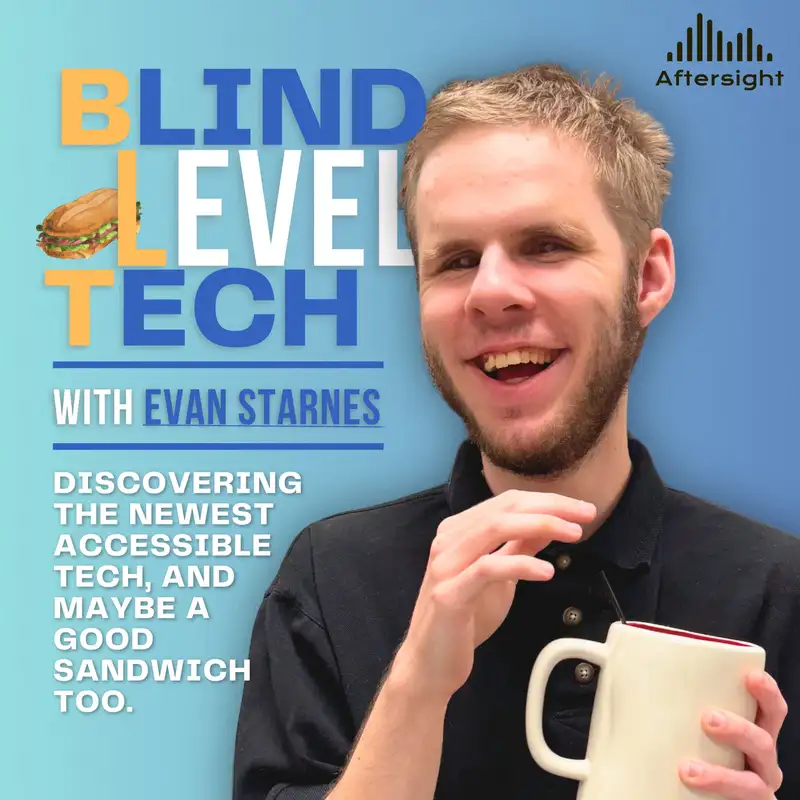
Easy to understand, the blind chick is just fun. She, Penn, my development director, our development director, she is blind herself and she interviews folks who are blind and low vision really throughout the world. And just, they talk about all the cool things they do. They're doing the difficult transitions that they've had, all those sorts of things. So that's super interesting. And Evan, who is our lead audio technician, he hosts
blind novel tech and is letting people know about all things assistive technology and even technology that's not designed to be assisted but works really well for blind individuals. So all of those things we have now, have a peer support group that's virtual. We have a virtual book club. And then we provide free white canes as well. So we have all these different things now that we've added and all the different ways people can listen to.
our programming as well. So it started with, I mentioned I was setting up equipment receivers when that we provide echoes and folks can listen on their smartphones and you know, all sorts of all sorts of different ways. So it's really changed a lot over the years. So in this decade that I'm just finishing up my 50s is just about to be 60. I really feel like it's been defined one by leadership. became the executive director early on in my 50s.
piece of what is now AfterSight. And there were a lot of changes. So we changed our name, obviously, from Audio Information Network of Colorado to AfterSight. Last year, we changed our location. We moved from Boulder to Louisville. We've just been loving being here in Louisville. So that's been great. Early on, and actually right before I became the director, we had started testing the Amazon Echo devices as listening devices.
Kim Wardlow (29:29.208)
for our listeners. And that turned out to be really good because, as we all know, in 2020, the COVID hit and everybody was indoors. Our volunteers all started reading at home instead of coming into our studios. And we were having to do virtual training for setups and virtual presentations.
But we had folks that had been hesitant to use like an echo or the internet, you know, technology that made that leap during COVID because it was so isolating and it really gave them connection to the outside community. Not only through our programming, but just being able to, you know, audibly call a relative or we had one listener that was playing, they were playing, he was playing a game with his
with his cousin that would call and instead of just chatting for five minutes, they would play a game using the Echo. And that was great. So we had all kinds of stories like that. We formed a program advisory council, which is really how our originals came to be from saying, what do you need? How can we be providing more that is helpful to the blind revision?
community, deafblind community, we've been working on that as well. And just folks that might need alternatives to print, but you especially those communities. And what if it didn't have to be a publication? And so that's how navigating life with vision loss started and Blindsight spun off from that because mental health was our first topic. So.
That's been a big change. Sometimes with all those changes, and I had never, as I've been telling you the history of my life, you may have noticed, I had never been a director or a manager of people before. So it was a big step for me. And some days with change after change after change, it just felt like I was climbing like 114 or after. Last summer we were here outside.
Kim Wardlow (31:44.076)
Most of it we had ice cream outside. And this week, Altrecht came and we had ice cream outside and did tours of our new offices and studio. And we had volunteers and listeners and board members, staff, obviously. So lots of folks from the community. had listeners who are blind, who were low vision, who were deafblind, who maybe they're participating in one of, you know, either a book club or a piece of
We have folks that got in white canes. Some people used one service, other people used everything. We had people who'd been on our hikes that we've done. I think this year's gonna be, I wanna say our fifth year of hikes coming up this fall in September. And as I stood there and looked around at all these people, there's just so much hope and...
good feelings and like, wow, you know, we are able to do all these things together and, and live independently and get our information and do what we need to do. And we're all helping and supporting each other. So not just one way, not just volunteers to listeners, but you know, listeners, you know, providing information and help and things too. really, you know,
a two-way street or multi-way, if you're looking at all the different folks that work with us, sponsors for our events. So lots of folks came. as I looked at that, I just thought, wow, it's all worth it. It's all worth it to see this and to see community being built in this way. And it makes everything better in our state for whole groups of people.
keeps me going as we continue to have changes and funding changes and programming changes and all the things because that's just how life is. It's constant change. And I know as I move into this next decade, there will continue to be challenges. But I also know that I'm going to continue to meet really interesting and fascinating people. And I'm going to have meaningful moments where
Kim Wardlow (34:07.244)
You just have those moments. You're like, yes, this is why I do what I do. And that's always so great to have. I have a great team that surrounds me. I my knitting buddies. Some of them come on our hikes with us. I have my great coworkers. So all of us together. And as I look back over everything, I think, wow, you know, I thought.
volunteering to read for the blind was just, you know, it's, it's fun. I had something I like to do. I like to read. I like to read out loud and I'm helping somebody. How great is that? But I had no idea at the time. I didn't even know. I didn't even know it was a thing like that. You could be a director of an organization that does what we do. I didn't even know it existed at the time until I started reading. Um, but I had no idea that really it would become.
my life's work and my purpose to create community and help individuals that have disabilities, especially in terms of vision loss or blindness, deafblind, to be able to get information and to be able to be independent on their own terms and live really full lives and all of us be part of community together. I had no idea, but it's made
Such a huge difference in my life. And I think for a lot of us, I know for my team as well. So of course, I'm the director of a nonprofit. So you really didn't think you were gonna get through this video with at least one ask. Great. So as part of my birthday, we've been doing a campaign to ask folks if you've been enjoying this program. If you...
have someone in your life or maybe it was a grandparent or somebody you knew a neighbor who had vision loss. Maybe they lived here and used our service. Maybe they lived in another state. Maybe they used tucking books, but you can relate to individuals who need the types of services that we provide. If you would consider celebrating my birthday with me, you don't have to send me personally a gift, but I would love it if you would donate.
Kim Wardlow (36:31.086)
$10 for a decade or $30 or $60 for all six of my decades to AfterSight. And you can do that just by going to our donate page on aftersite.org. And we would love for you to do that. And then you will not only be donating, but you're going to be part of this whole community that I've been describing to you that's so vibrant and exciting and
you'll be part of all the new things that we'll be doing in the next decade. So join me.
Listen to Blind Level Tech using one of many popular podcasting apps or directories.